Governed AI · Energy and industry
Beyond the digital twin: a cognitive layer for integrated energy hubs
Integrated energy hubs combine refining, power generation, data centres, desalination, supply, trading and finance. A digital twin can describe the plant. The decisions that matter cross every domain at once.

A digital twin models the plant, not the decisions
Large industrial developments in the Gulf increasingly combine several businesses on one site. A refinery shares utilities with a power plant, a data centre draws on the same grid and water, and offtake agreements and financing covenants depend on all of them. Digital twins and planning models describe the physical assets very well. What they do not capture is how a decision in one domain moves through all the others.
Three challenges
- Decisions cross domains. Crude supply, hydrogen, power, data-centre load, offtake and financing conditions move together.
- Knowledge is scattered. Piping and instrumentation diagrams, HAZOP records, procedures, crude assays, contracts and permits live in separate systems and teams.
- Events don’t wait. A cargo disruption or a change in crude quality ripples through yields, utilities, offtake commitments and liquidity within days.
The cognitive layer
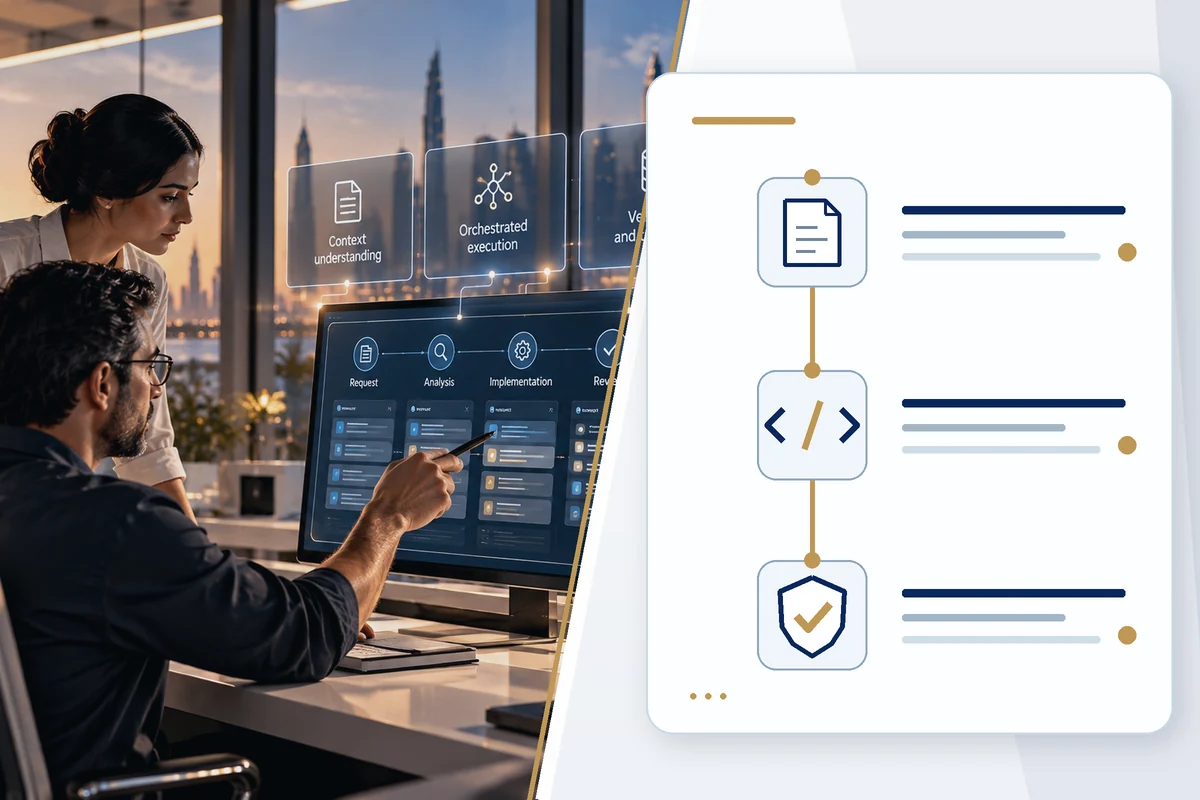
YasIQ is designing a governed cognitive layer above the digital twin and the existing systems. It does not replace engineering tools or control systems. It connects the Knowledge and the people that decisions depend on.
- Governed Knowledge before the investment decision. Engineering packages, studies and registers become queryable Knowledge, with open items traced to their owners and to the project gates.
- One event, one traced review. A single event, such as a change in feedstock quality, triggers a coordinated review of its consequences across operations, energy, commercial commitments and financing.
- Specialised agent teams. Agents prepare options, checks and decision packages across the decision domains of the hub, from engineering and maintenance to trading, risk and management.
Recommendations stay advisory
In an industrial setting, the boundary between advice and action must be absolute. In this approach there is no AI write path to control or safety systems. Agents prepare and explain options; named people with the relevant authority decide, and every decision is recorded with its evidence and its owner.
Why it matters for lenders and boards
Integrated hubs are financed on the strength of their assumptions and their governance. A traced record of how events were assessed and how decisions were taken gives management, lenders and partners something a dashboard cannot: the ability to reconstruct why the organisation acted as it did.
Sovereign by design
Industrial Knowledge is strategic. The cognitive layer is designed to run within the operator’s own environment, with local models where required and external AI used only deliberately and with authorised context.
This article describes a project currently in the design phase. It does not refer to a completed project.
 Watch on YouTube · 2-minute explainerCrudence: The Cognitive Layer for Integrated Energy Hubs | Governed AI for RefineriesYasIQ channel · opens in a new tab
Key takeaways
- Digital twins model physical assets; the critical decisions in an energy hub cross refining, power, data, trading and finance.
- A cognitive layer turns scattered engineering and commercial documents into governed, queryable Knowledge.
- One event triggers one traced review of its consequences across all domains.
- There is no AI write path to control or safety systems. People with authority decide.
Frequently asked questions
Does a cognitive layer replace the digital twin?
No. It sits above the digital twin and existing systems, connecting their information with documents, decisions and the people accountable for them.
Can AI agents act on plant control systems?
No. In this approach recommendations remain advisory and there is no AI write path to control or safety systems.
What kind of documents become governed Knowledge?
Engineering packages, studies, registers, P&IDs, HAZOP records, procedures, crude assays, contracts and permits, each with its source, version and permissions.
Want to explore how this applies to your organisation?
Discuss your challenge